
Artificial Intelligence in the Church: A Call for Real Wisdom
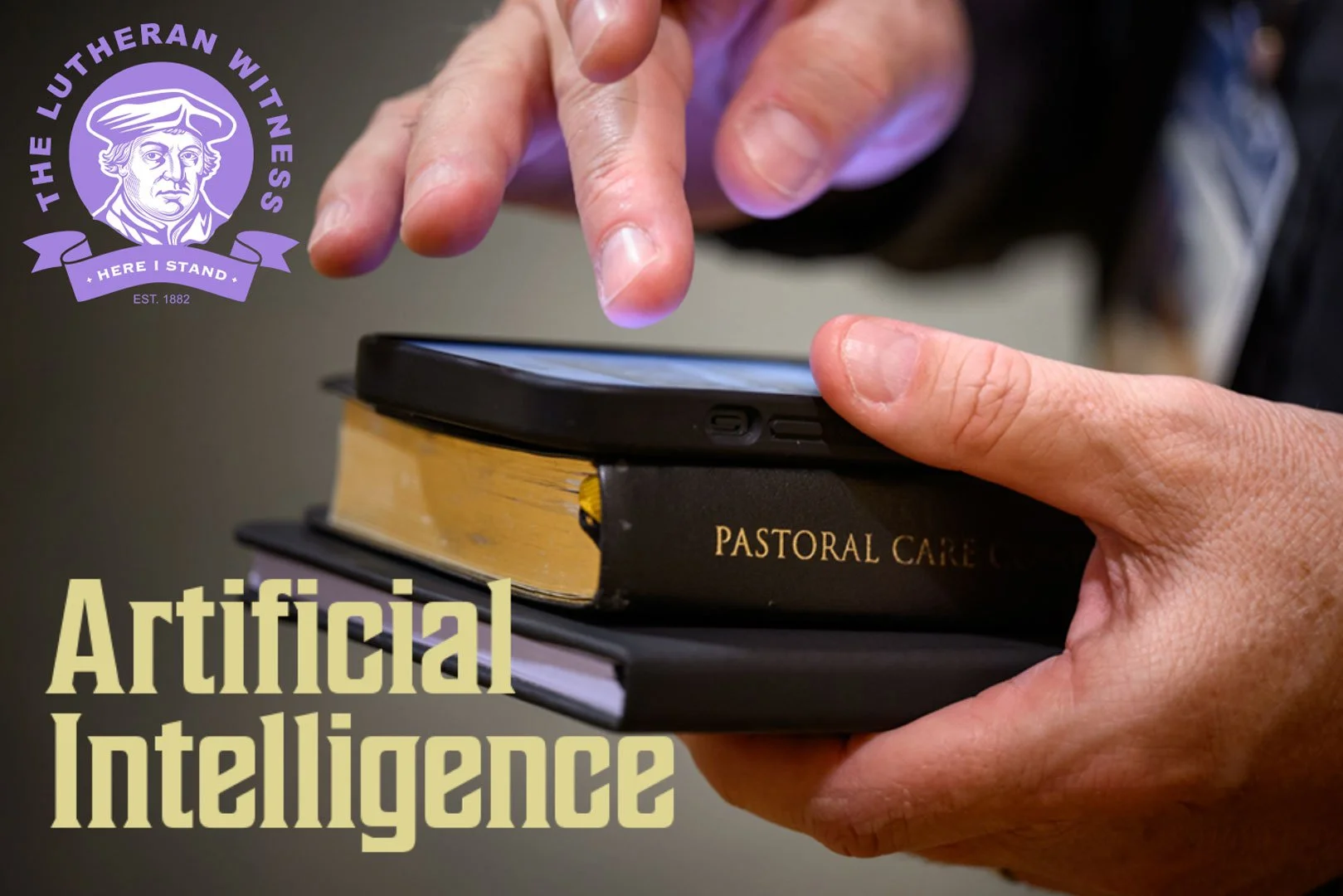
Artificial intelligence (AI) is crashing into the church.
Should pastors, church workers and Christians in general use it? Is it a phenomenally positive tool, or does it pose a serious threat to humanity and to the church?
These are just two of the pressing questions facing us today. But, first, what are we even talking about when we say “artificial intelligence”? Most people think of ChatGPT, Claude, Gemini or any of the other popular large language models (LLMs)/ chatbots. These bots are the “Hungry, Hungry Hippos™” of the computer programming world. Their creators have essentially placed these hungry hippos in a box filled with mind-bogglingly large amounts of text (books and articles), images (artwork and photos) and videos. These serve as “food” for the bot. The bot devours everything in the box and then regurgitates it in intelligible sentences (or images) according to the rules of probability.
When discussing whether Christians should use AI, we need to specify which type of AI we’re considering. Beyond LLMs, AI is also being used in medical research and diagnosis, security and surveillance, warfare, data processing, customer service, process automation and supply chain optimization, marketing and content creation, image and music generation, financial fraud detection, autonomous vehicles and more. This brief article, then, will be limited to the popular LLMs/chatbots most people interact with regularly. Its goal is to encourage wisdom and initiate a conversation that needs to be taken up across our church body.
Click the link below to read the complete story …
Artificial intelligence (AI) is crashing into the church.
Should pastors, church workers and Christians in general use it? Is it a phenomenally positive tool, or does it pose a serious threat to humanity and to the church?
These are just two of the pressing questions facing us today. But, first, what are we even talking about when we say “artificial intelligence”? Most people think of ChatGPT, Claude, Gemini or any of the other popular large language models (LLMs)/ chatbots. These bots are the “Hungry, Hungry Hippos™” of the computer programming world. Their creators have essentially placed these hungry hippos in a box filled with mind-bogglingly large amounts of text (books and articles), images (artwork and photos) and videos. These serve as “food” for the bot. The bot devours everything in the box and then regurgitates it in intelligible sentences (or images) according to the rules of probability.
When discussing whether Christians should use AI, we need to specify which type of AI we’re considering. Beyond LLMs, AI is also being used in medical research and diagnosis, security and surveillance, warfare, data processing, customer service, process automation and supply chain optimization, marketing and content creation, image and music generation, financial fraud detection, autonomous vehicles and more. This brief article, then, will be limited to the popular LLMs/chatbots most people interact with regularly. Its goal is to encourage wisdom and initiate a conversation that needs to be taken up across our church body.
Tools, including technology, change the way we see the world. Technology changes what we believe is possible, even what we believe is reasonable. Too many people have simplistically concluded that the concerns surrounding AI are merely a matter of how we use it, for good or ill, as if the tool itself were neutral. There are no neutral tools. That doesn’t mean tools are necessarily bad (though some may be); it simply means tools change us.
While AI has had many positive impacts, it is also leading to detrimental changes not only in the workplace, but also in the church and among church workers. AI is changing expectations for worker productivity. Workers have bodies. Bodies get tired. They need to eat, sleep and take breaks. AI doesn’t. AI tempts us to believe that we can — and should — transcend our bodies. This is affecting and will affect church workers and church members. Church members may, probably unintentionally, expect greater productivity, greater efficiency and greater content generation from church workers — and church workers will feel the pressure.
AI is currently being marketed heavily to pastors like me. We’re being offered AI tools to “repurpose” our sermons into Bible studies, articles, small-group discussion guides and social-media-ready, cut-and-curated sermon clips to be posted strategically throughout the week so as to “maximize impact” and to “extend the reach” of the Gospel. Doesn’t that sound amazing? Who doesn’t want to extend the reach of the Gospel?
But such uses of AI raise questions about the incarnational nature of the sermon given by the called and ordained representative of Jesus. Is the sermon merely “content”? Is there really no substantial difference between creating content (what humans do) and generating it (what AI bots do)?
Yet despite serious questions like these, AI tools are already being incorporated in our church body and across wider Christendom, creating a cult of content generation and efficiency that has huge implications for the church and her workers.
The principle insightfully expressed by the economist Thomas Sowell applies here: There are no solutions, only tradeoffs. In this case, a wholesale prioritization of content generation and efficiency requires trading away deep thinking. When efficiency becomes the ultimate standard, deep thought dies. Deep thought does not move at the pace of AI; it moves at the pace of wisdom. There is nothing artificial about wisdom. Wisdom is gained slowly, through meditation and reflection (some may recall Luther’s exhortation to oratio, meditatio, tentatio — prayer, meditation, trial). As Christians, we understand that wisdom is found in a source beyond us, from without: from the Word of God (see Psalm 1 for a fantastic expression of this).
In the church, we need to regain a necessary truth: Thinking is useful work. The cult of content generation and efficiency devalues thinking. There’s no time for it. I often wonder how our church would change if we valued thinking, both for our laity and our church workers — if one day of our church workers’ week, for instance, could be set aside for deep thinking, for meditating deeply on God’s Word.
Does this mean AI has no place in the church? Not necessarily. It does offer certain benefits, despite the risks and tradeoffs. Here are four ways AI is being used in ministry, along with a few questions and admonitions drawn from biblical wisdom.
AI as research assistant
Let’s say your pastor is preparing a Bible study on eschatology and wants to get a basic overview of the major views. AI can provide this for him — and do it exceptionally well — but a caveat is in order: Your pastor must come to the AI assistant with a working knowledge of the subject matter. AI makes mistakes. Remember, it’s a probability machine. It is not sentient. It doesn’t have any idea what it’s doing. It’s really, really good, but it gets things wrong. It can be a helpful research assistant, but the researcher (whether pastor, church worker or church secretary) bears responsibility for the research.
When it comes to AI, it’s critical that we remember this truth: If you don’t bring wisdom to AI, it will make you the fool. If we haven’t done the slow, hard work of gaining wisdom (through focused study of God’s Word), AI may improve our efficiency and increase the content we generate, but it may also end up revealing us to be prolific and efficient fools.
AI as copy editor
Let’s consider AI as a copy editor. Your pastor, church worker or secretary can upload his or her document to AI and ask it to find run-on sentences, cliches, unsupported assumptions, etc., and make suggestions on how to tighten and clarify the arguments and sentences. Is this acceptable? You’re probably torn. Good. You’re exercising wisdom. Catching run-ons and suggesting clearer wording is one thing, but what if it suggests a change that alters the meaning? Again, wisdom is required — the wisdom that comes from outside us, from deep study of the source of wisdom, God’s Word. AI could suggest a right and proper change; it could also suggest grammatically correct falsehoods.
AI as doctrinal reviewer
As you may know, AI bots are trainable. Let’s say we trained our bot to be “Lutheran” (even saying this is deceptive, because machines don’t have confessional subscriptions!), feeding it our confessional documents and Synod convention resolutions. And let’s say your church worker wanted to see if his paper or sermon had any theological red flags in it. Could he use AI as a doctrinal reviewer? The answer isn’t easy, is it? You may argue that this is better done in person with fellow church workers. But time and distance war against this ideal. AI bots are always available and never distant. If AI is to be used for doctrinal review (a question we need to debate thoroughly), wisdom demands faithful attention to God’s Word to sort out whether AI recommendations are truly in line with our confession.
AI as ghost writer
AI can research, edit and review. It can also generate content. Do you need a Bible study? AI can generate one according to your specifications. Do you need to write an overture for a convention? AI can generate one for you. Do you need it to review a book for you? It will. Do you want it to write a sermon for you? It will. Do you want it to write prayers, a kyrie, even a hymn for you? It will. Most of us (including me!) are quick to cry foul here, but those who are using AI for these purposes argue that they review the final product. They argue that their oversight of the AI-generated content is the important thing, not whether they actually wrote it. What do you think?
What makes this more difficult to parse is that we use machines to do our work for us all the time: calculators to compute for us, forklifts to lift for us, robots to build for us, elevators to carry us, etc. This is part of the dominion God has given us. Critiquing AI as ghost writer will require deeper thinking. There is the question of honesty, if we claim AI-generated content as our own, and the question of plagiarism (AI’s content has been pilfered from across the internet and reassembled, leaving no way to know from whom it was taken).
A deeper response requires us to reflect on what it means to be human and on how the reality of the body and incarnational theology affect the way we do ministry. It requires us to come to grips with the Office of the Ministry and what it is. A pastor is more than a content generator. He is a human being — body and soul — baptized into Christ’s death and resurrection, filled with the Holy Spirit and ordained by the church to preach the inspired Word of God and call sinners to penitent saving faith. A bot has no body, no soul, no Baptism, no Spirit, no ordination, no penitence, no faith.
Personally, I think there is a place for AI if we come to it with wisdom, but I have grave reservations about how it could change us and the church. My hope is that our interactions with AI will expose the cult of content generation and efficiency and move us to turn to a deep, “Psalm 1” meditation on the Word — slowing us down to go deeper into the Word to find wisdom. My fear is that AI will make us shallow and burn out our workers at alarming rates.
The question of AI cannot be resolved in one issue of a magazine (let alone in one article). It must be addressed across our Synod — in classrooms, at circuit meetings, in council meetings, in conferences, and in journals and podcasts. Now, more than ever, we need real wisdom in the face of an ever-spreading artificial intelligence. Now is the time to slow down and go deep down into the Word, as we bring wisdom to bear on these and many, many more AI-related questions facing our church today.
August 1, 2026 / Print Feature, The Magazine / By Jonathan Conner
This article originally appeared in print in the August 2026 issue of The Lutheran Witness.

Zion’s Communion Statement
Communion Statement
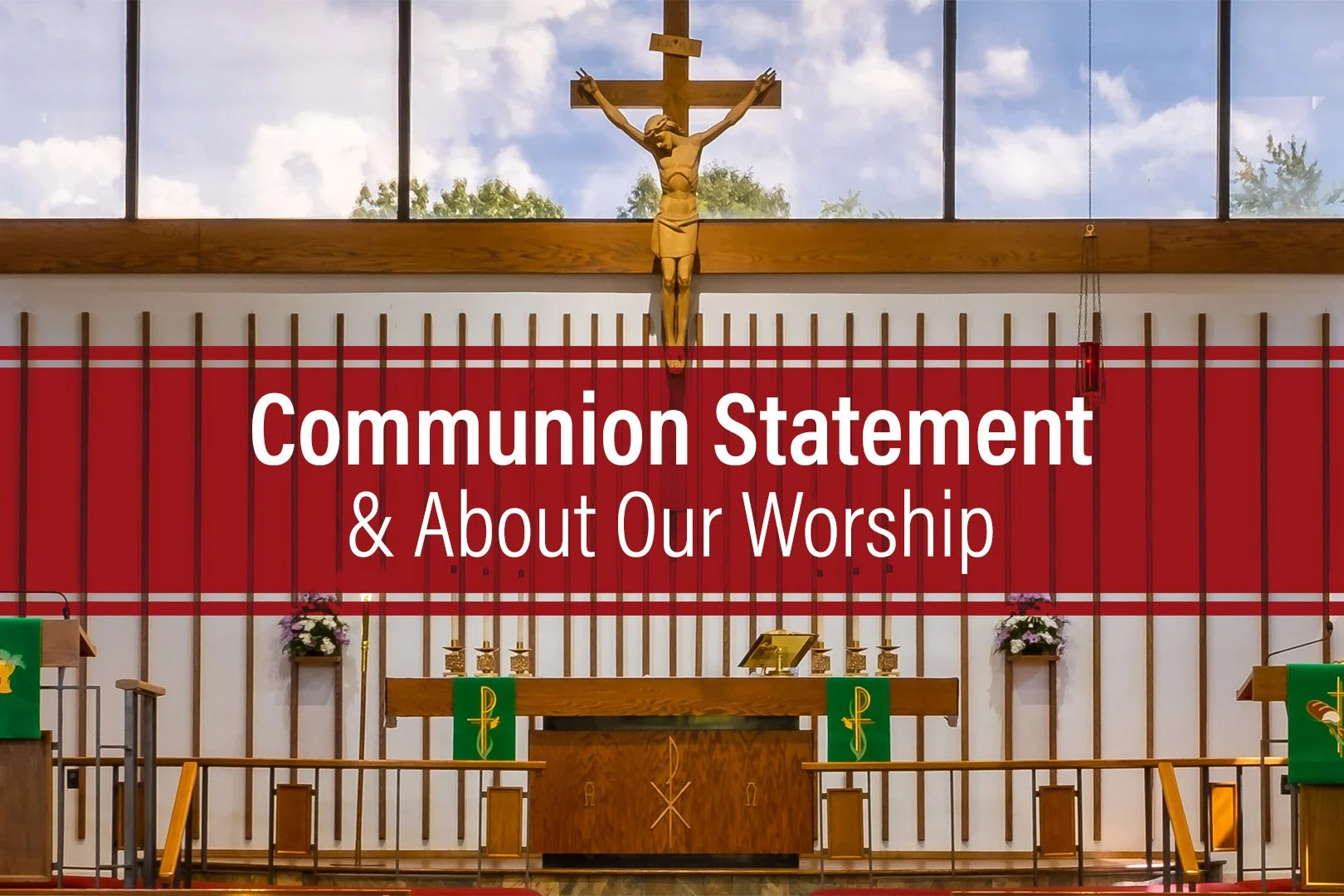
We believe that in the Lord’s Supper, Christ’s physical body and blood are present in the bread and wine (1 Cor. 11:23-25). We also believe receiving the Lord’s Supper is an act of church fellowship. Scripture cautions that those who receive without recognizing Christ’s body and blood will bring judgment upon themselves (1 Cor. 11:27-29). Therefore, out of love to our guests, we invite to our altar to receive the Lord’s Supper those who are baptized, confirmed, repentant members of Lutheran Church – Missouri Synod congregations or sister congregations. If you are visiting us today from another Christian denomination, we welcome you to come to the altar to receive a baptismal blessing. Please signify by crossing your arms over your chest upon kneeling.
Click the link below to read the complete statement …
Communion Statement
We believe that in the Lord’s Supper, Christ’s physical body and blood are present in the bread and wine (1 Cor. 11:23-25). We also believe receiving the Lord’s Supper is an act of church fellowship. Scripture cautions that those who receive without recognizing Christ’s body and blood will bring judgment upon themselves (1 Cor. 11:27-29). Therefore, out of love to our guests, we invite to our altar to receive the Lord’s Supper those who are baptized, confirmed, repentant members of Lutheran Church – Missouri Synod congregations or sister congregations. If you are visiting us today from another Christian denomination, we welcome you to come to the altar to receive a baptismal blessing. Please signify by crossing your arms over your chest upon kneeling.
In preparation to receive the Lord’s Supper in a worthy manner please consider reading “Christian Questions with their Answers” on Page 329-330. If you are interested in exploring membership, please talk with Pastor Grimenstein or call the church office.
Our Worship
Our worship services are based on traditional church liturgies in which God speaks to us in His Word and we respond to Him. These liturgies were used by the early church almost 2000 years ago and are rich in biblical meaning, connecting us to our past -- and future -- in Christ Jesus. There is a depth to Lutheran worship that can take time to appreciate, thus you may find that you don’t understand everything that is happening the first week you visit. That’s OK, we encourage you to keep visiting!
Calling All Pro Life Lutherans
Calling All Pro Life Lutherans
PENNSYLVANIA MARCH FOR LIFE HARRISBURG, PA | SEPTEMBER 23, 2024
Gather with pro-life Lutherans prior to the 2024 March for Life Pennsylvania at The Hilton in Harrisburg, One N. 2nd St. in Harrisburg to be encouraged and take a stand for mothers, fathers, and their children born and unborn. A full breakfast, free of charge, (graciously provided by a grant from the English District of the LCMS) will be served from 9:00 AM to 10:00 AM. Speakers Scott Licht of Lutherans for Life, and Maria Gallager from the PA Pro-Life Federation will briefly address us. We will walk together to the Capitol steps for the 11:00 AM Rally and 12:00 PM March.
Click the link for complete details ...

PENNSYLVANIA MARCH FOR LIFE HARRISBURG, PA | SEPTEMBER 21, 2026
Gather with pro-life Lutherans prior to the 2026 March for Life Pennsylvania at The Hilton in Harrisburg, One N. 2nd St. in Harrisburg to be encouraged and take a stand for mothers, fathers, and their children born and unborn. A full breakfast, free of charge, (graciously provided free of charge by Mount Calvary Lutheran Church, Lititz, PA) will be served from 9:00 AM to 10:00 AM. We will walk together to the Capitol steps for the 10:30 AM Rally and 12:00 PM March. RSVP with your groups attendance:
Gather with your pro-life Lutheran brothers and sisters prior to the 2024 PA March for Life at:
THE HILTON HARRISBURG ONE N. 2ND STREET HARRISBURG, PA 17101
9:00 AM to 10:00 AM
Meet and Greet with Full Breakfast
Full breakfast graciously provided free of charge by Mount Calvary Lutheran Church, Lititz, PA
10:00 AM
Welcome, and Keynote Speakers:
”That They May Have Life” Dr. Aric Penske, Executive Director of Lutherans for Life and Jill B. Hartman, Executive Director of A Woman’s Concern Pregnancy & Parenting Resource Center
10:30 AM
Walk to the Capitol Steps for the Rally
12:00 PM
March Begins
FOR MORE INFORMATION CONTACT:
Jeanie Zentz at 717-475-0271 or visit www.LancasterLutheran.com
Visit https://marchforlife.org/Pennsylvania/ for complete details and RSVP
There’s an app for that!
There’s an app for that!
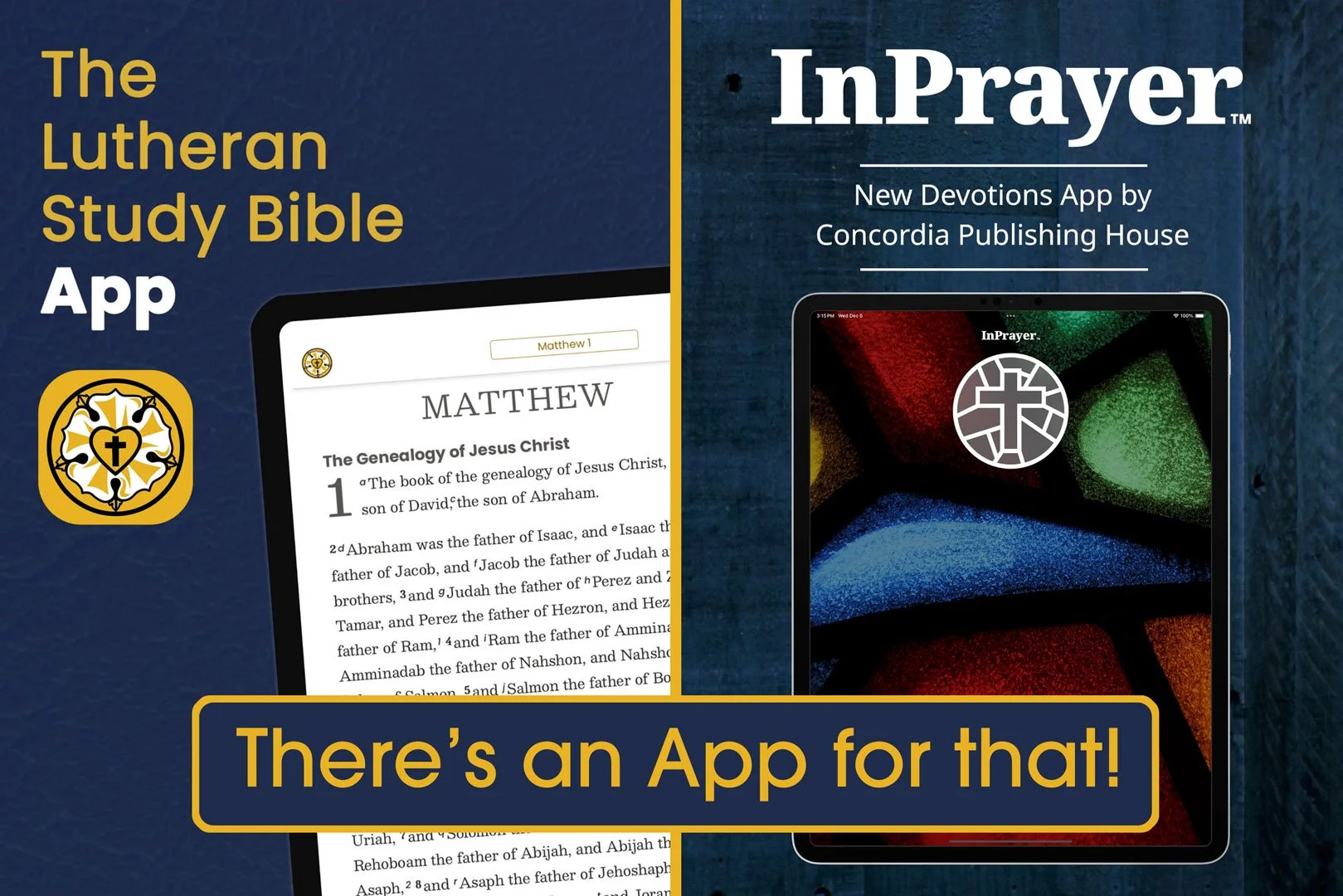
Guide your time in God’s Word with the latest apps from Concordia Publishing House.
• InPrayer (Play Store) (Apple Store)
• The Lutheran Bible Study (Play Store) (Apple Store)
• Check out additional apps on LCMS.org
There’s an app for that!
Guide your time in God’s Word with the latest apps from Concordia Publishing House.
• InPrayer (Play Store) (Apple Store)
• The Lutheran Bible Study (Play Store) (Apple Store)
• Check out additional apps on LCMS.org
VIDEO: Wednesday, August 26, 2026 - Complete Service
Each service at Zion Lutheran Church (normally the first of our two Sunday services) is streamed LIVE on our YouTube channel. These streams are for Sunday’s, Wednesday’s, Lenten, Advent, and special services. The entire service is streamed from beginning-to-end. Weddings and Funerals can also be streamed, if requested in advance.

Bulletin for Wednesday, August 26, 2026
Archive of AUDIO “Readings & Sermons”
Archive of VIDEO “Complete Service”
Archive of Sunday Bible Studies
Archive of Bulletins
2:00 p.m. - Worship Service
2:30 p.m. - Bible Study: I Samuel
This service will be LIVE STREAMED on our YouTube Channel
Audio: Readings & Sermon for Wednesday, August 26, 2026
This audio-only file includes all the readings from scripture, along with the sermon — and when available, the announcements, adult choir, men’s choir, and/or bell choir. Also posted along with the audio file is the text for all the scripture readings, and a link to the current bulletin, and our YouTube channel if you prefer to watch the LIVE Stream.
Bulletin for Wednesday, August 26, 2026
Archive of AUDIO “Readings & Sermons”
Archive of VIDEO “Complete Service”
Archive of Sunday Bible Studies
Archive of Bulletins
2:00 p.m. - Worship Service
2:30 p.m. - Bible Study: I Samuel
This service will be LIVE STREAMED on our YouTube Channel
First Reading – 2 Samuel 11:1-27
In the spring of the year, the time when kings go out to battle, David sent Joab, and his servants with him, and all Israel. And they ravaged the Ammonites and besieged Rabbah. But David remained at Jerusalem.
It happened, late one afternoon, when David arose from his couch and was walking on the roof of the king's house, that he saw from the roof a woman bathing; and the woman was very beautiful. And David sent and inquired about the woman. And one said, “Is not this Bathsheba, the daughter of Eliam, the wife of Uriah the Hittite?” So David sent messengers and took her, and she came to him, and he lay with her. (Now she had been purifying herself from her uncleanness.) Then she returned to her house. And the woman conceived, and she sent and told David, “I am pregnant.”
So David sent word to Joab, “Send me Uriah the Hittite.” And Joab sent Uriah to David. When Uriah came to him, David asked how Joab was doing and how the people were doing and how the war was going. Then David said to Uriah, “Go down to your house and wash your feet.” And Uriah went out of the king's house, and there followed him a present from the king. But Uriah slept at the door of the king's house with all the servants of his lord, and did not go down to his house. When they told David, “Uriah did not go down to his house,” David said to Uriah, “Have you not come from a journey? Why did you not go down to your house?” Uriah said to David, “The ark and Israel and Judah dwell in booths, and my lord Joab and the servants of my lord are camping in the open field. Shall I then go to my house, to eat and to drink and to lie with my wife? As you live, and as your soul lives, I will not do this thing.” Then David said to Uriah, “Remain here today also, and tomorrow I will send you back.” So Uriah remained in Jerusalem that day and the next. And David invited him, and he ate in his presence and drank, so that he made him drunk. And in the evening he went out to lie on his couch with the servants of his lord, but he did not go down to his house.
In the morning David wrote a letter to Joab and sent it by the hand of Uriah. In the letter he wrote, “Set Uriah in the forefront of the hardest fighting, and then draw back from him, that he may be struck down, and die.” And as Joab was besieging the city, he assigned Uriah to the place where he knew there were valiant men. And the men of the city came out and fought with Joab, and some of the servants of David among the people fell. Uriah the Hittite also died. Then Joab sent and told David all the news about the fighting. And he instructed the messenger, “When you have finished telling all the news about the fighting to the king, then, if the king's anger rises, and if he says to you, ‘Why did you go so near the city to fight? Did you not know that they would shoot from the wall? Who killed Abimelech the son of Jerubbesheth? Did not a woman cast an upper millstone on him from the wall, so that he died at Thebez? Why did you go so near the wall?’ then you shall say, ‘Your servant Uriah the Hittite is dead also.’”
So the messenger went and came and told David all that Joab had sent him to tell. The messenger said to David, “The men gained an advantage over us and came out against us in the field, but we drove them back to the entrance of the gate. Then the archers shot at your servants from the wall. Some of the king's servants are dead, and your servant Uriah the Hittite is dead also.” David said to the messenger, “Thus shall you say to Joab, ‘Do not let this matter displease you, for the sword devours now one and now another. Strengthen your attack against the city and overthrow it.’ And encourage him.”
When the wife of Uriah heard that Uriah her husband was dead, she lamented over her husband. And when the mourning was over, David sent and brought her to his house, and she became his wife and bore him a son. But the thing that David had done displeased the LORD.
Second Reading – 1 Corinthians 11:17-34
But in the following instructions I do not commend you, because when you come together it is not for the better but for the worse. For, in the first place, when you come together as a church, I hear that there are divisions among you. And I believe it in part, for there must be factions among you in order that those who are genuine among you may be recognized. When you come together, it is not the Lord's supper that you eat. For in eating, each one goes ahead with his own meal. One goes hungry, another gets drunk. What! Do you not have houses to eat and drink in? Or do you despise the church of God and humiliate those who have nothing? What shall I say to you? Shall I commend you in this? No, I will not.
For I received from the Lord what I also delivered to you, that the Lord Jesus on the night when he was betrayed took bread, and when he had given thanks, he broke it, and said, “This is my body, which is for you. Do this in remembrance of me.” In the same way also he took the cup, after supper, saying, “This cup is the new covenant in my blood. Do this, as often as you drink it, in remembrance of me.” For as often as you eat this bread and drink the cup, you proclaim the Lord's death until he comes.
Whoever, therefore, eats the bread or drinks the cup of the Lord in an unworthy manner will be guilty concerning the body and blood of the Lord. Let a person examine himself, then, and so eat of the bread and drink of the cup. For anyone who eats and drinks without discerning the body eats and drinks judgment on himself. That is why many of you are weak and ill, and some have died. But if we judged ourselves truly, we would not be judged. But when we are judged by the Lord, we are disciplined so that we may not be condemned along with the world.
So then, my brothers, when you come together to eat, wait for one another— if anyone is hungry, let him eat at home—so that when you come together it will not be for judgment. About the other things I will give directions when I come.
The Ten Commandments
What is the seventh commandment?
You shall not steal.
What does this mean?
We should fear and love God so that we do not take our neighbor’s money or possessions, or get them in any dishonest way, but help him to improve and protect his possessions and income.